菜单
菜单

Mecano ID, France | Airbus, Spain: Testing NASA Curiosity's Science Instruments
The client

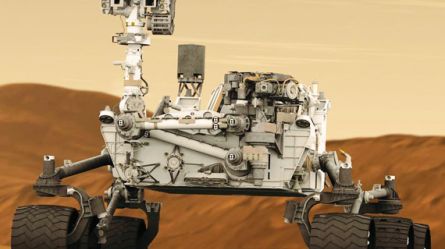
Since 2012, NASA’s Curiosity rover has been investigating Martian geology and past habitability. Two of its its high-tech science instruments were vibration tested using our solutions to ensure they survive launch and landing:

  • ChemCam (Chemistry & Camera): A laser-firing instrument used to identify Martian samples. It emits million-watt pulses to turn target rocks into glowing plasma. An onboard telescope and three spectrometers then analyze the light to determine elemental composition and identify samples.

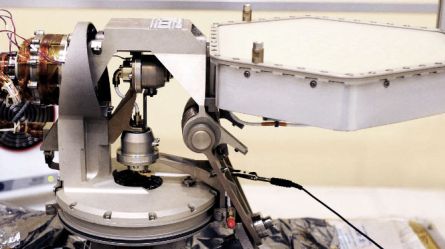
  • High-Gain Antenna: The rover has three antennas that serve as both its "voice" and its "ears". The high-gain antenna is used to receive commands for the mission team back on Earth.

The solution 

m+p international provided the high-performance vibration control systems necessary for qualification.

ChemCam - Mecano ID:
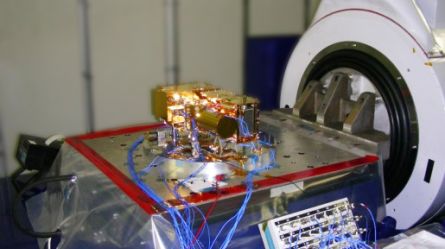
Qualification testing was done at Mecano ID in Toulouse/France using a 48- to 80-channel DAQ hardware and a 70 kN shaker in a Class 100,000 cleanroom.

Antenna Testing - Airbus Defence and Space:
Airbus Defence and Space (formerly: EADS CASA) in Madrid/Spain was responsible for design, analysis and full qualification and acceptance testing. Airbus utilized a 96-channel DAQ system with a 90 kN shaker.

The result 

By utilizing m+p international’s precise testing solutions, NASA’s partners ensured Curiosity’s instruments were flight-ready. Years after landing, the rover continues to find chemical evidence of past habitable environments, successfully exploring the Martian surface and transmitting groundbreaking data back to Earth.

Photo credits:

(1) Curiosity rover | Credit: NASA
(2) Vibration testing of Curiosity rover’s ChemCam | Credit: Mecano ID, Toulouse
(3) Vibration testing of Curiosity’s High-Gain Antenna | Credit: Airbus Defense and Space